

Responsible Sourcing
Good things grow when responsibility starts at the source.
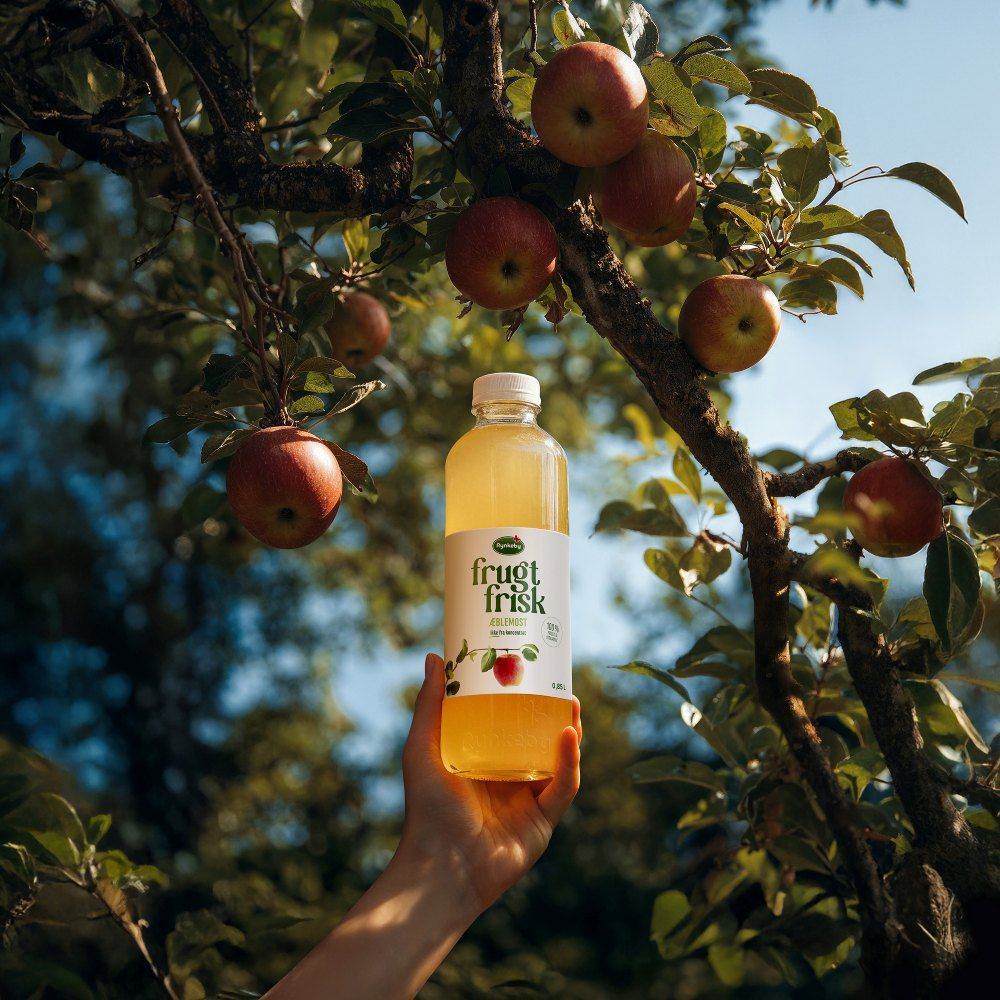
Fruits and vegetables are at the heart of our business. Responsible sourcing is therefore a key element of our sustainability strategy. Our ambition is to source 100% of our fruits and vegetables in accordance with recognised sustainability standards by 2030. By increasing the share of fruits and vegetables sourced in line with these standards, we aim to support environmental and social improvements across our value chain.
Our Sustainable Sourcing Policy sets out the standards and requirements that guide our responsible sourcing approach. As a member of the Sustainable Juice Covenant (SJC), our progress towards this ambition is regularly reviewed by independent third parties, currently PricewaterhouseCoopers.

Standards for Sustainable Fruit and Vegetable Sourcing
Sustainable sourcing requires clear definitions, transparency and traceability. At Eckes-Granini, fruits and vegetables are considered sustainably sourced only when their cultivation and subsequent processing steps have been assessed and verified according to internationally recognised standards.
Different sustainability requirements apply at different stages of the value chain. At farm level, sustainable practices must be verified through recognised agricultural standards such as the Farm Sustainability Assessment (FSA). In processing and blending, compliance with independently verified social standards benchmarked under the Sustainable Supply Chain Initiative (SSCI) is required. At Eckes-Granini production sites, social compliance is assessed through SMETA 4-Pillar audits.
Sustainable Standards in Our Value Chain
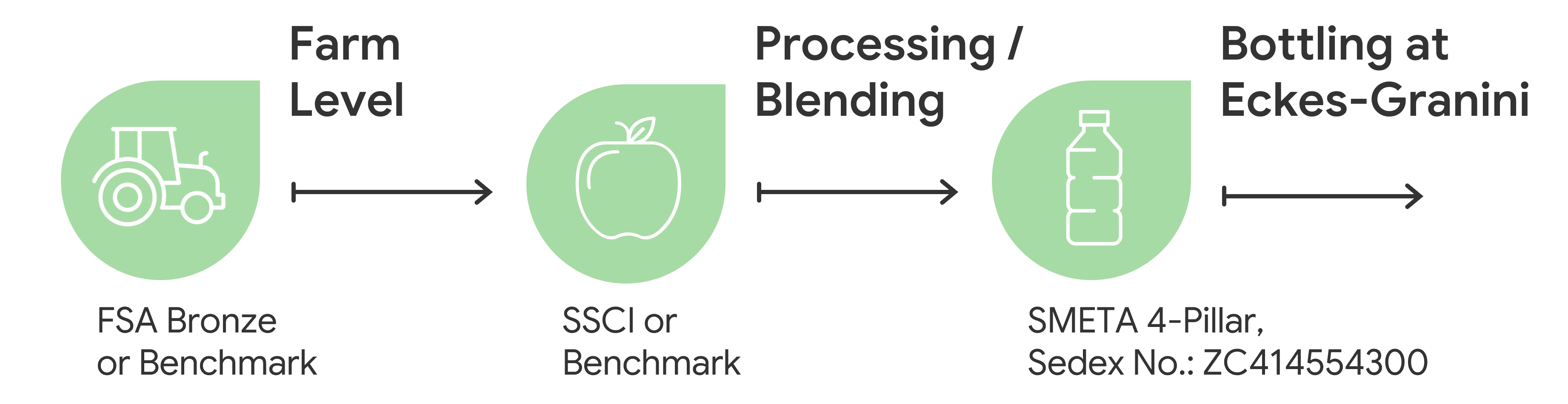
Where physical segregation of raw materials is not feasible, we apply the Mass Balance principle. This allows sustainable and non-sustainable raw material volumes to be managed within the same supply chain, provided that all volumes are documented and the volume declared as sustainably sourced does not exceed the certified sustainable volume entering the system.
Standards at Farm Level
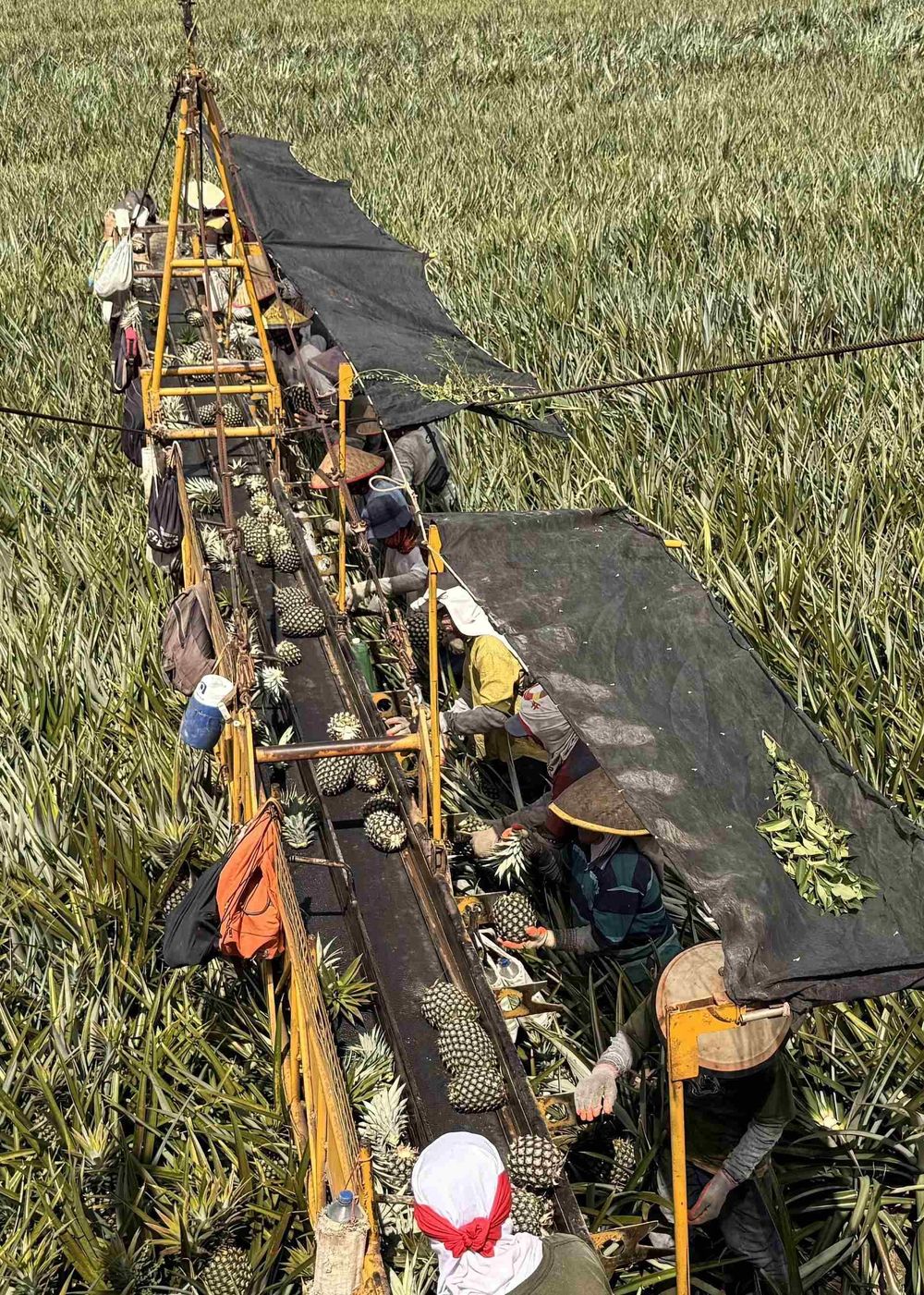
The Farm Sustainability Assessment (FSA), developed by the Sustainable Agriculture Initiative (SAI), is one of the most widely recognised assessment frameworks for sustainable agricultural production. It provides a common industry approach for evaluating environmental, social and economic practices at farm level.
The assessment covers 11 sustainability topics that address key aspects of agricultural production, ranging from farm management and labour conditions to water use, biodiversity and greenhouse gas emissions. By applying a common framework, the FSA helps create greater consistency and comparability across agricultural supply chains.
11 sustainability topics covered by the FSA:
Farm Management & Community
Plant Material Selection & Propagation
Soil Management
Nutrient Management
Crop Protection
Waste Management
Water Management
Biodiversity
Air Quality & Greenhouse Gas Emissions
Labour Conditions
Integrated Pest Management.
The FSA distinguishes between three performance levels: Bronze, Silver and Gold. Eckes-Granini recognises FSA Bronze or higher, as well as standards benchmarked as equivalent to FSA Bronze or higher by the SAI Platform.
Further information on FSA and recognised equivalent standards is available from the SAI Platform: https://saiplatform.org/resource-centre/fsa/
Standards in Processing, Blending and Bottling
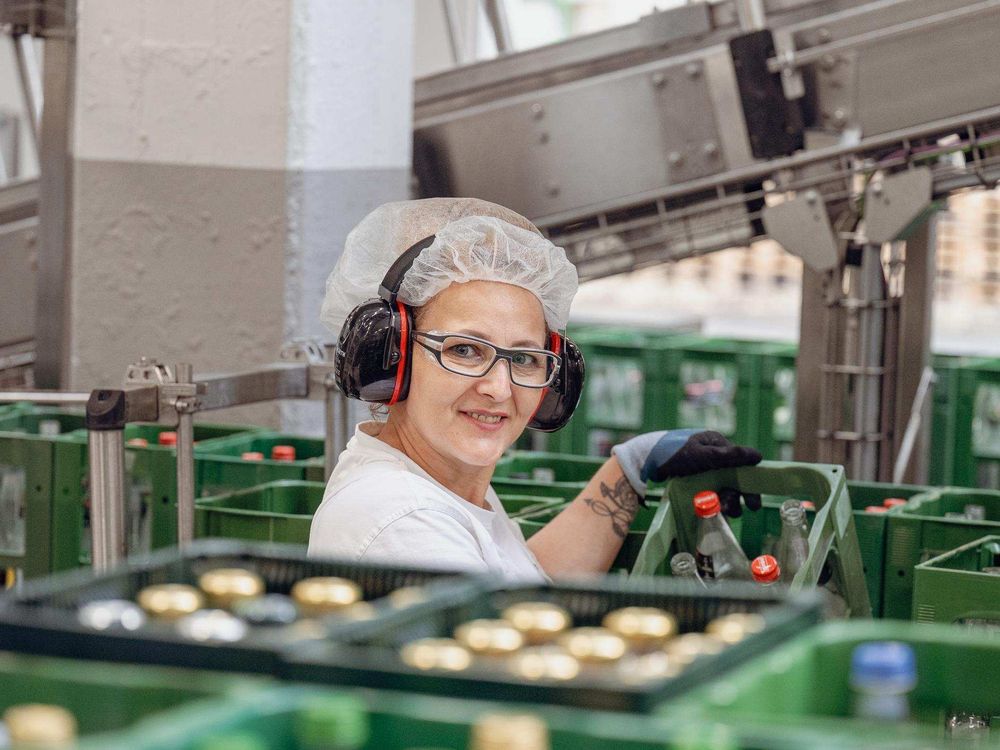
For processing, blending and bottling activities, compliance with independently verified social standards benchmarked under the Sustainable Supply Chain Initiative (SSCI) is required. These include schemes such as SMETA 4-Pillar, SA8000 and amfori BSCI.
Benchmark criteria include, among others:
Management Systems
Compliance with National Legislation
No Forced, Bonded or Prison Labour
No Child Labour
Health and Safety
Freedom of Association and Effective Recognition of the Right to Collective Bargaining
Building and Fire Safety
No Discrimination, Harassment or Abuse
Wages, Benefits and Terms of Employment
Working Hours
Grievance Mechanisms.
Verification and certification are conducted by independent third parties. Eckes-Granini reviews audit reports, certificates and supporting documentation as part of supplier qualification and ongoing supplier monitoring.
„ECKES-GRANINI SUSTAINABLE SOURCING POLICY
"Our Sustainable Sourcing Policy is created to help our suppliers and internal stakeholders to recognize sustainability standards, which we are requiring from the suppliers. It provides a common framework for sourcing criteria, decisions and supplier expectations across our value chain."
Heikki Hirvonen Director Procurement

Mass Balance Principle
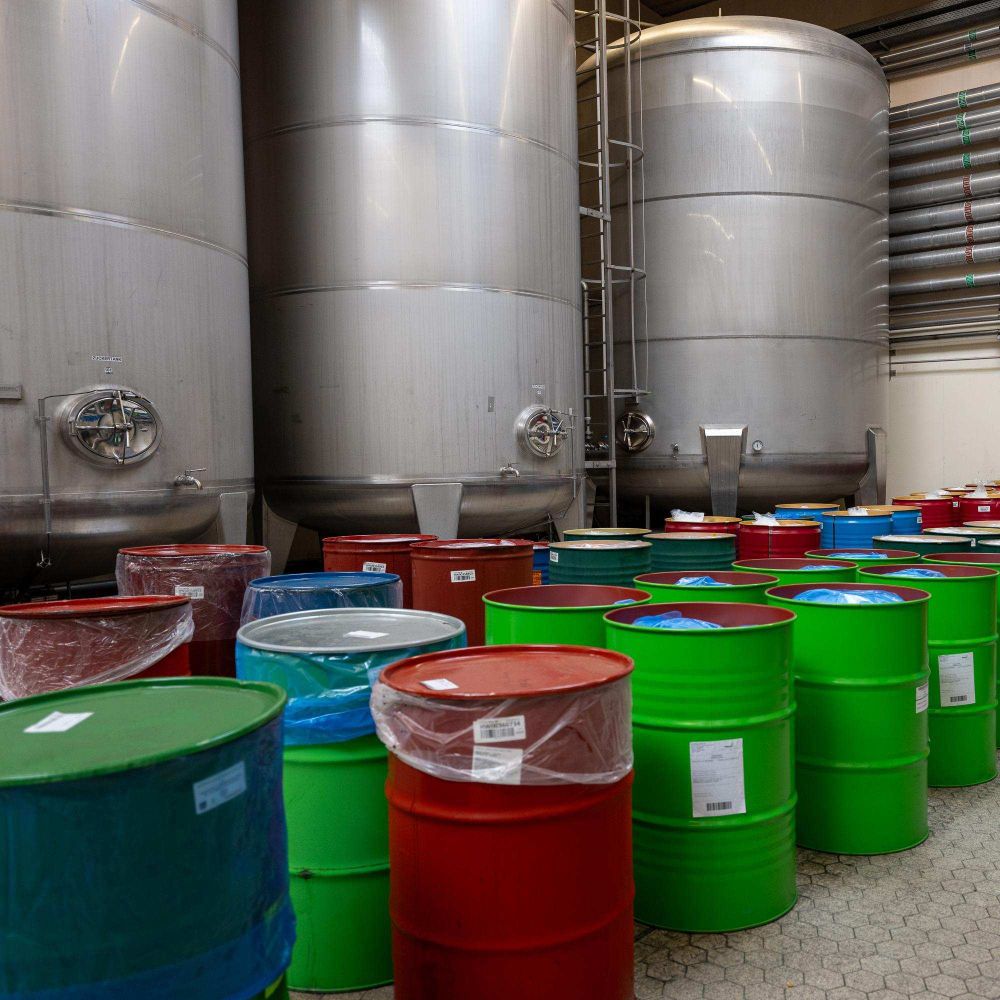
Physical segregation of sustainable and non-sustainable raw materials is not always feasible in complex juice supply chains. In these situations, the Mass Balance Principle provides a recognised chain-of-custody approach that allows certified and non-certified raw materials to be managed within the same system while maintaining documented sustainability volumes.
The principle is based on two key requirements:
All relevant volumes are fully documented.
The volume declared as sustainably sourced never exceeds the certified sustainable volume entering the system.
This approach supports the implementation of sustainable sourcing in global juice supply chains while maintaining traceability and volume control. It can also help facilitate the inclusion of farmers, including smallholders, as they progress towards recognised sustainability standards.
Mass Balance documentation forms part of the annual monitoring conducted within the Sustainable Juice Covenant (SJC). In addition, the use of Mass Balance systems is recommended in sector guidance, including the AIJN Guidance Document and the sustainability requirements of the SJC.
Our Roadmap to 2030
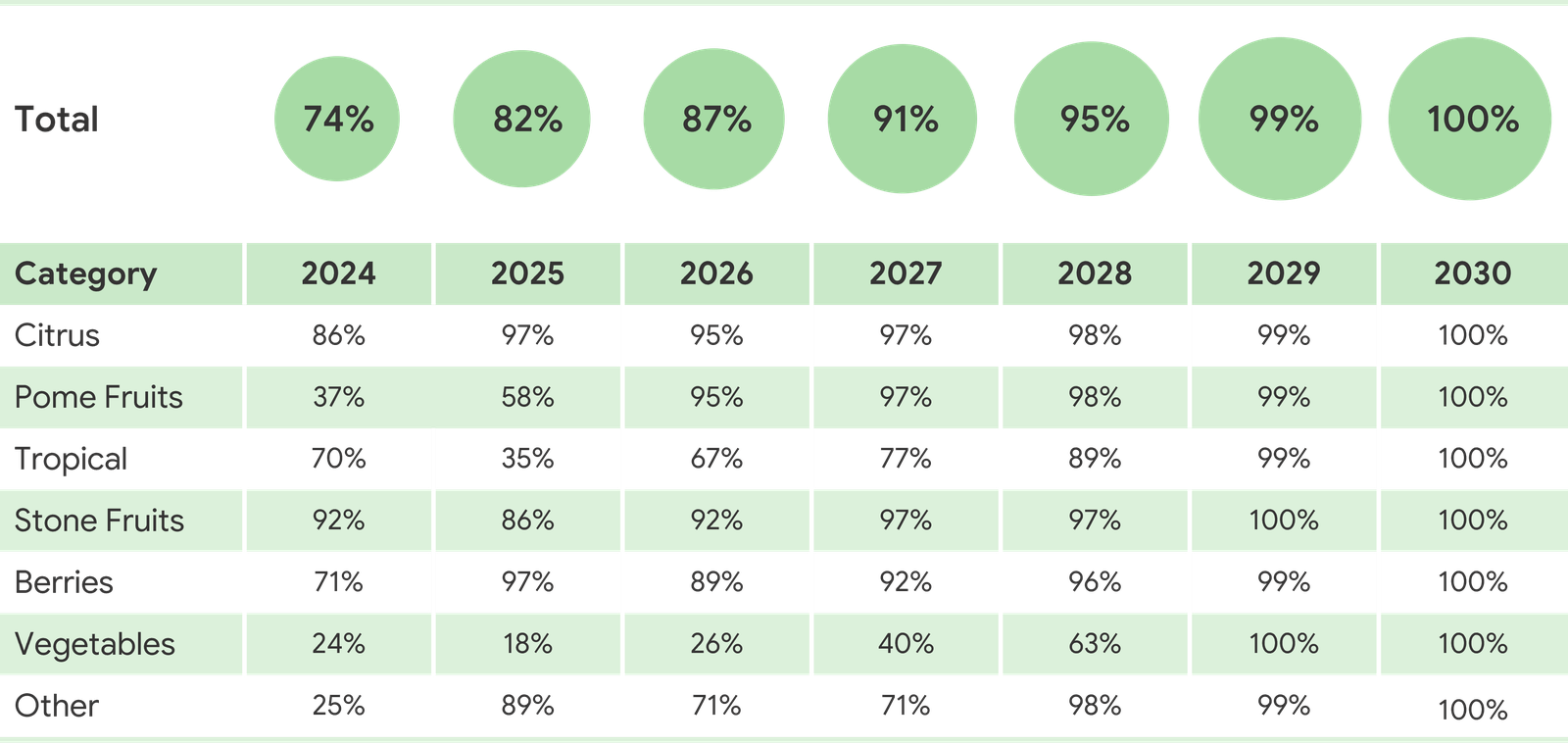
Our objective is clearly defined: by 2030, all fruits and vegetables used for our juices, nectars, concentrates and purées shall be sourced in accordance with internationally recognised sustainability standards and verification systems. Progress towards the 2030 target is monitored annually by PwC as an independent third party. The review assesses annual progress against the target and includes recommendations and improvement actions to support the achievement of the 2030 objective.
The roadmap is based on the expected progression across major fruit and vegetable categories, taking into account different starting points and development trajectories.

Sustainable Juice Covenant
Good things grow together
Collaborative action is essential for advancing sustainable sourcing across the juice sector. The Sustainable Juice Covenant (SJC) brings together companies across the value chain that work with aligned definitions, recognised standards and common monitoring requirements.
Eckes-Granini has been an active member since 2019. Our approach is aligned with these sector-wide frameworks and supported by annual monitoring and independent assurance processes.
Methodology & Limitations
Certification cycles, regional differences and external factors can influence the availability and quality of sustainability data. Despite established monitoring and verification systems, deviations or data gaps cannot be fully excluded.